

Earnings results often indicate what direction a company will take in the months ahead. With Q2 behind us, let’s have a look at Veeva Systems (NYSE:VEEV) and its peers.
Software is eating the world, and while a large number of solutions such as project management or video conferencing software can be useful to a wide array of industries, some have very specific needs. As a result, vertical software, which addresses industry-specific workflows, is growing and fueled by the pressures to improve productivity, whether it be for a life sciences, education, or banking company.
The 14 vertical software stocks we track reported a satisfactory Q2. As a group, revenues beat analysts’ consensus estimates by 1.6% while next quarter’s revenue guidance was 1.5% above.
Thankfully, share prices of the companies have been resilient as they are up 9.1% on average since the latest earnings results.
Veeva Systems (NYSE:VEEV)
Originally named "Verticals onDemand" before rebranding in 2009, Veeva Systems (NYSE:VEEV) provides cloud software, data solutions, and consulting services that help life sciences companies develop and bring products to market more efficiently.
Veeva Systems reported revenues of $928 million, up 17.6% year on year. This print exceeded analysts’ expectations by 2.5%. Overall, it was a strong quarter for the company with a solid beat of analysts’ adjusted operating income estimates and full-year EPS guidance beating analysts’ expectations.
"AI is opening up the next big chapter for Veeva and life sciences," said CEO Peter Gassner. "Vault CRM had its best quarter ever and Veeva Falcon accelerated rapidly. By bringing together deep industry applications, agents, data, and consulting, we are helping the industry drive new efficiencies from clinical to commercial and deliver better outcomes for patients."
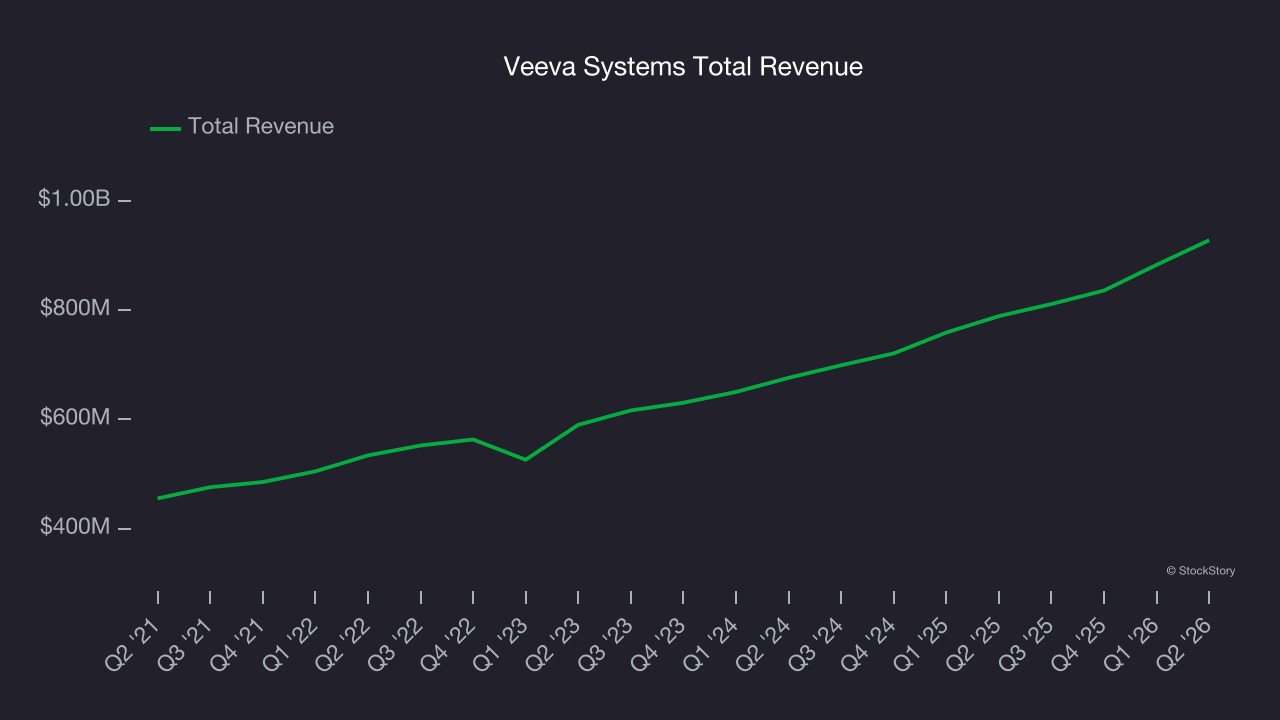
Interestingly, the stock is up 21.3% since reporting and currently trades at $297.02.
Best Q2: Unity (NYSE:U)
Powering over half of the world's mobile games and expanding into industries from automotive to architecture, Unity (NYSE:U) provides software tools and services that allow developers to create, run, and monetize interactive 2D and 3D content across multiple platforms.
Unity reported revenues of $546.5 million, up 23.9% year on year, outperforming analysts’ expectations by 6.1%. The business had a stunning quarter with an impressive beat of analysts’ billings estimates and EBITDA guidance for next quarter exceeding analysts’ expectations.
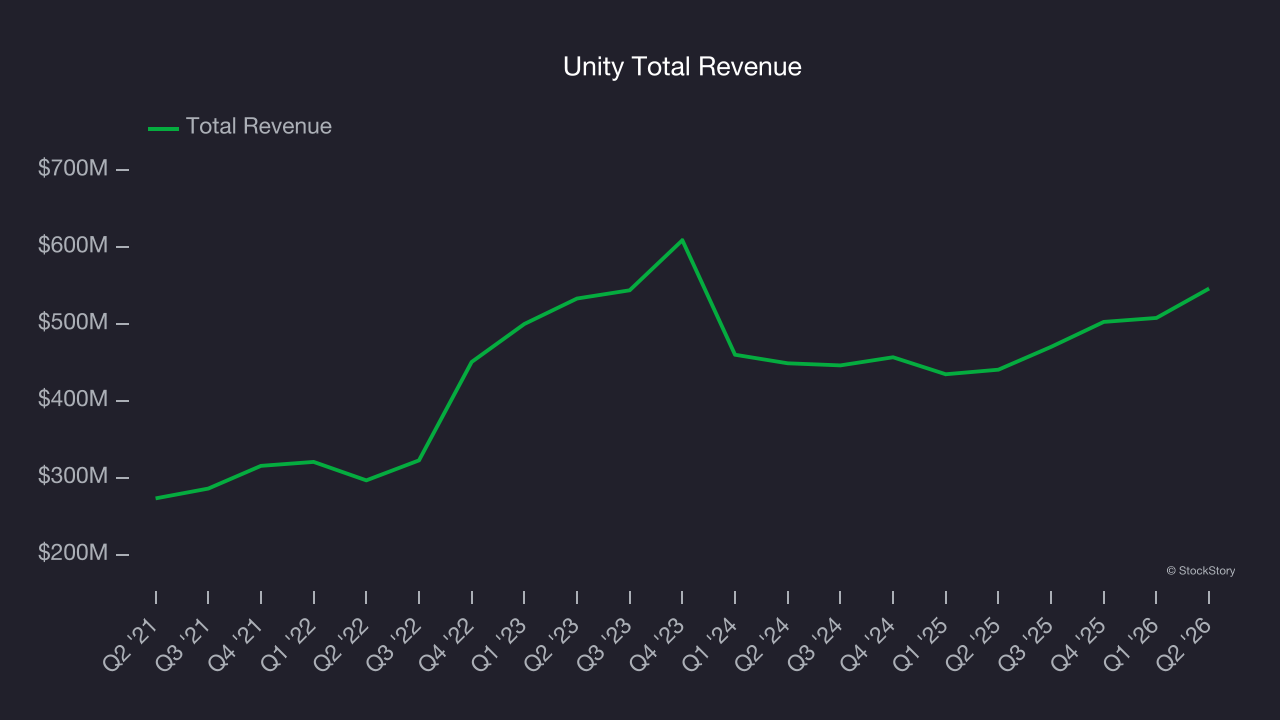
Unity pulled off the biggest analyst estimate beat among its peers. The market seems happy with the results as the stock is up 32.1% since reporting. It currently trades at $46.85.
Is now the time to buy Unity? Access our full analysis of the earnings results here, it’s free.
Weakest Q2: Upstart (NASDAQ:UPST)
Using over 2,500 data variables and trained on nearly 82 million repayment events, Upstart (NASDAQ:UPST) is an AI-powered lending platform that uses machine learning to help banks and credit unions more accurately assess borrower risk for personal loans, auto loans, and home equity lines of credit.
Upstart reported revenues of $364.7 million, up 41.7% year on year, exceeding analysts’ expectations by 2.3%. Still, it was a slower quarter as it posted full-year revenue guidance missing analysts’ expectations significantly.
Upstart delivered the fastest revenue growth but had the weakest full-year guidance update in the group. As expected, the stock is down 20.5% since the results and currently trades at $24.10.
Read our full analysis of Upstart’s results here.
Dolby Laboratories (NYSE:DLB)
Known for its iconic "D" logo that appears before countless movies and TV shows, Dolby Laboratories (NYSE:DLB) designs and licenses audio and video technologies that enhance entertainment experiences in movies, TV shows, music, and other media.
Dolby Laboratories reported revenues of $305 million, down 3.3% year on year. This print came in 2% below analysts’ expectations. More broadly, it was a mixed quarter as it also recorded revenue guidance for next quarter exceeding analysts’ expectations but EPS guidance for next quarter meeting analysts’ expectations.
Dolby Laboratories achieved the highest guidance raise but had the weakest performance against analyst estimates of the whole group. The stock is up 13.4% since reporting and currently trades at $58.74.
Read our full, actionable report on Dolby Laboratories here, it’s free.
Doximity (NYSE:DOCS)
With over 80% of U.S. physicians as members of its digital community, Doximity (NYSE:DOCS) operates a digital platform that enables physicians and other healthcare professionals to collaborate, stay current with medical news, manage their careers, and conduct virtual patient visits.
Doximity reported revenues of $156.6 million, up 7.3% year on year. This number beat analysts’ expectations by 3.5%. Taking a step back, it was a slower quarter as it recorded full-year EBITDA guidance missing analysts’ expectations significantly and EBITDA guidance for next quarter missing analysts’ expectations significantly.
The stock is up 47.6% since reporting and currently trades at $30.49.
Read our full, actionable report on Doximity here, it’s free.
Market Update
Over the past year, investors have been forced to repeatedly answer the same question: what is the market’s biggest risk? The answer has changed several times, and each shift has reshaped market leadership.
Late in 2025 and early 2026, artificial intelligence became the market’s primary uncertainty. Investors questioned whether AI would erode software pricing power and weaken competitive moats as AI made it easier to replicate once-differentiated products.
By the spring, technology took a back seat to geopolitics. The U.S. conflict with Iran briefly became the market’s dominant narrative, raising concerns about oil prices, inflation, and global growth. But as energy markets remained orderly and fears of a prolonged supply disruption faded, investors quickly turned their focus back to fundamentals.
Want to invest in winners with rock-solid fundamentals? Check out our 9 Best Market-Beating Stocks and add them to your watchlist. These companies are poised for growth regardless of the political or macroeconomic climate.